Introduction
AI Digital Marketing 2027 is set to transform how businesses attract customers, optimize advertising campaigns, and build stronger relationships with their audiences. As artificial intelligence continues to advance, marketers are discovering powerful opportunities to automate repetitive tasks, analyze customer behavior, and deliver highly personalized digital experiences.
Today, businesses increasingly rely on AI-powered marketing tools to process large amounts of data, identify emerging trends, improve campaign performance, and make smarter decisions.
From predictive analytics and intelligent automation to AI-generated content and advanced audience targeting, artificial intelligence is reshaping traditional digital marketing strategies.
However, successful AI adoption requires more than simply using the latest technology. Businesses must combine intelligent tools with creativity, strategic planning, and a deep understanding of customer needs.
Before exploring AI-powered marketing techniques, discover our guide to 6 Essential Successful Digital Marketing Strategies to build a strong foundation for your marketing campaigns.
In this comprehensive guide, we’ll explore 7 powerful AI Digital Marketing 2027 strategies that can help businesses improve customer engagement, streamline marketing operations, maximize return on investment (ROI), and achieve sustainable growth.
1. AI Digital Marketing 2027: Advanced Data Analytics and Audience Insights
Understanding your audience is the foundation of every successful marketing strategy.
One of the most valuable applications of AI Digital Marketing 2027 is the ability to analyze large datasets and transform customer information into actionable insights.
AI-powered analytics can help businesses identify behavioral patterns, understand customer preferences, and recognize opportunities that might otherwise go unnoticed.
By combining historical data with machine learning models, marketers can develop a clearer understanding of how customers interact with their brands.
How AI Improves Marketing Data Analysis
Artificial intelligence can support several important marketing activities:
-
Customer Segmentation: Group audiences based on interests, purchase behavior, engagement patterns, and other relevant characteristics.
-
Behavioral Analysis: Identify how visitors navigate websites, interact with advertisements, and complete purchases.
-
Trend Identification: Discover emerging patterns in customer demand and market activity.
-
Campaign Optimization: Evaluate marketing performance and identify opportunities to improve results.
-
Customer Journey Analysis: Understand the interactions that influence conversions and long-term customer relationships.
Platforms such as Google Analytics 4 (GA4) and HubSpot provide analytics, automation, and AI-assisted capabilities that help marketers understand customer behavior.
For example, GA4 offers predictive metrics for eligible properties, while HubSpot provides tools for customer relationship management, marketing automation, and AI-assisted workflows.
These technologies can help businesses make more informed decisions, allocate marketing resources effectively, and develop campaigns that better match audience expectations.
As AI analytics capabilities evolve, businesses that prioritize accurate data collection, privacy, and meaningful performance measurement will be better positioned to compete.
2. Improve Customer Experience Through AI Automation and Personalization
Personalization is becoming an increasingly important part of modern digital marketing.
Customers expect businesses to understand their preferences and deliver relevant content, products, and recommendations.
A major opportunity within AI Digital Marketing 2027 is using intelligent automation to create more personalized customer experiences across multiple communication channels.
AI-Powered Product and Content Recommendations
Recommendation systems analyze user interactions, preferences, and historical behavior to suggest relevant products or content.
Platforms such as Netflix and Amazon demonstrate how recommendation technologies can help users discover content and products aligned with their interests.
Businesses can apply similar principles to e-commerce stores, educational platforms, and subscription services.
Intelligent Chatbots and AI Customer Support
AI-powered chatbots can help businesses respond to common questions, provide product information, and assist customers throughout their purchasing journeys.
Tools and platforms such as ChatGPT, HubSpot, and conversational AI solutions can support automated customer interactions when integrated into appropriate business workflows.
Potential benefits include:
-
Faster responses to frequently asked questions.
-
More consistent customer support across communication channels.
-
Personalized product recommendations.
-
Automated lead qualification.
-
Reduced workload for customer service teams.
-
Improved availability outside traditional business hours.
However, businesses should provide clear escalation options when customers need human assistance.
AI-Powered Email Marketing
Artificial intelligence can also improve email marketing through audience segmentation, personalized content, and automated customer journeys.
For example, an online store might automatically send relevant product recommendations based on browsing behavior or follow-up messages after an abandoned checkout.
AI-assisted systems can help marketers test subject lines, analyze engagement, and optimize campaign timing.
When implemented responsibly, these strategies can improve customer satisfaction while supporting stronger relationships and long-term retention.
3. Optimize Digital Advertising with AI-Powered Targeting
Digital advertising is another major area where artificial intelligence is changing marketing practices.
Within AI Digital Marketing 2027, machine learning and automated campaign optimization can help advertisers make more effective decisions about audience targeting, bidding strategies, and advertising budgets.
Platforms such as Google Ads and Meta Ads already use machine learning to support campaign delivery and optimization.
How AI Improves Advertising Campaigns
AI-powered advertising systems can assist with:
-
Audience Targeting: Identify groups of users who may be more likely to engage with relevant advertisements.
-
Automated Bidding: Adjust bids according to campaign objectives and available performance signals.
-
Budget Optimization: Allocate advertising resources across campaigns and opportunities.
-
Creative Optimization: Test different advertising messages, images, and formats.
-
Performance Analysis: Identify trends in conversions, engagement, and advertising costs.
-
Conversion Prediction: Estimate the likelihood of desired actions based on available data.
For example, Google’s automated bidding strategies can optimize bids toward specific conversion goals, while Meta’s AI-powered advertising features help advertisers automate parts of campaign delivery.
Improve Return on Investment (ROI)
Businesses should evaluate advertising performance using relevant metrics, including:
-
Return on Ad Spend (ROAS).
-
Cost Per Acquisition (CPA).
-
Click-Through Rate (CTR).
-
Conversion Rate.
-
Customer Lifetime Value (CLV).
Rather than relying exclusively on automated recommendations, marketers should combine AI-generated insights with regular performance reviews and controlled experiments.
Successful advertising strategies require clear objectives, reliable conversion tracking, relevant creative assets, and responsible data practices.
4. Use AI Sentiment Analysis to Understand Customer Opinions
Understanding how customers feel about a brand can provide valuable insights into its reputation, products, and overall customer experience.
Sentiment analysis uses natural language processing (NLP) and machine learning to evaluate opinions expressed in text and other supported forms of customer feedback.
One of the emerging opportunities in AI Digital Marketing 2027 is using sentiment analysis to monitor customer satisfaction and identify changes in audience perception.
How Sentiment Analysis Works
AI-powered systems can analyze information from sources such as:
-
Social media comments and discussions.
-
Customer reviews and product ratings.
-
Customer support conversations.
-
Online surveys and feedback forms.
-
Public brand mentions.
-
Community discussions and relevant forums.
These systems can classify feedback into categories such as positive, negative, or neutral sentiment.
More advanced models may also identify recurring topics, customer concerns, and specific aspects of a product that generate dissatisfaction.
Benefits of AI Sentiment Analysis
Businesses can use sentiment analysis to:
-
Identify common customer complaints.
-
Understand audience reactions to marketing campaigns.
-
Monitor changes in brand perception.
-
Discover opportunities for product improvements.
-
Evaluate customer satisfaction trends.
-
Develop more relevant marketing messages.
For example, if customers repeatedly complain about complicated checkout processes, a business can prioritize improvements to its purchasing experience.
However, automated sentiment analysis is not always accurate, particularly when interpreting sarcasm, cultural expressions, or ambiguous language.
Human review remains important when making significant decisions based on customer feedback.
5. Improve Search Engine Optimization with AI-Powered SEO Tools
Search engine optimization remains an essential component of digital marketing.
Artificial intelligence can help marketers research search queries, analyze competing content, identify technical issues, and develop more effective content strategies.
An important application of AI Digital Marketing 2027 is combining AI-assisted SEO workflows with high-quality, helpful content that satisfies search intent.
AI-Powered Keyword Research
AI-assisted tools can help marketers discover relevant keywords, analyze search intent, and organize related topics into content clusters.
Understanding whether users are looking for information, comparing products, or preparing to make a purchase can help businesses create more targeted content.
AI-Assisted Content Optimization
SEO platforms such as Surfer SEO, Semrush, and Rank Math offer capabilities that can support content research, optimization, and workflow efficiency.
Depending on the platform, marketers can use these tools to:
-
Identify relevant keywords and related search topics.
-
Improve page titles and meta descriptions.
-
Analyze content structure and readability.
-
Discover opportunities for internal linking.
-
Evaluate technical SEO issues.
-
Monitor search visibility and content performance.
AI-generated suggestions should be reviewed carefully to ensure accuracy, originality, and relevance.
Understand AI and Search Engine Algorithms
Google uses various automated systems, including machine learning technologies, to interpret search queries and evaluate relevant content.
Systems such as RankBrain have contributed to how Google understands relationships between words and concepts.
However, RankBrain is part of Google’s search technology, not a standalone SEO optimization tool.
Businesses should focus on creating useful content rather than attempting to manipulate search algorithms.
For reliable guidance, marketers can review the official Google Search Central documentation.
Build a Sustainable AI SEO Strategy
An effective SEO strategy should combine:
-
High-quality, original content.
-
Clear search intent.
-
Relevant keyword targeting.
-
Logical internal linking.
-
Fast and accessible websites.
-
Mobile-friendly experiences.
-
Technical SEO best practices.
-
Regular content updates.
Artificial intelligence can accelerate research and optimization, but successful SEO still depends on delivering genuine value to readers.
6. Apply Predictive Analytics to Make Smarter Marketing Decisions
Predictive marketing uses historical data, statistical models, and machine learning to estimate potential future customer behaviors and business outcomes.
As AI Digital Marketing 2027 continues to develop, predictive analytics may become increasingly valuable for businesses seeking to improve marketing efficiency and anticipate customer needs.
Predict Customer Behavior
Predictive models can help marketers estimate outcomes such as:
-
The likelihood of a customer making a purchase.
-
The probability of subscription cancellation.
-
Potential customer lifetime value.
-
Future product demand.
-
Expected campaign conversions.
-
The likelihood of customer re-engagement.
These predictions can support more targeted campaigns and help businesses prioritize valuable customer segments.
Optimize Marketing Budgets
AI-assisted forecasting can help marketers evaluate historical campaign performance and estimate potential outcomes under different budget scenarios.
For example, a business might analyze previous conversion data to identify which channels are more likely to generate profitable customers.
This information can support better budget allocation across search advertising, social media, email marketing, and other channels.
Improve Campaign Timing and Planning
Predictive analytics can also help businesses identify seasonal trends, changes in customer demand, and potentially effective campaign periods.
Retailers may use demand forecasting to prepare promotional campaigns before expected increases in product interest.
Subscription businesses may use churn predictions to develop customer retention campaigns.
However, predictions are estimates rather than guarantees.
Businesses should continuously evaluate model accuracy, monitor changing market conditions, and validate recommendations using real-world performance data.
By combining predictive analytics with strategic planning, marketers can make more informed decisions and improve their ability to respond to changing customer expectations.
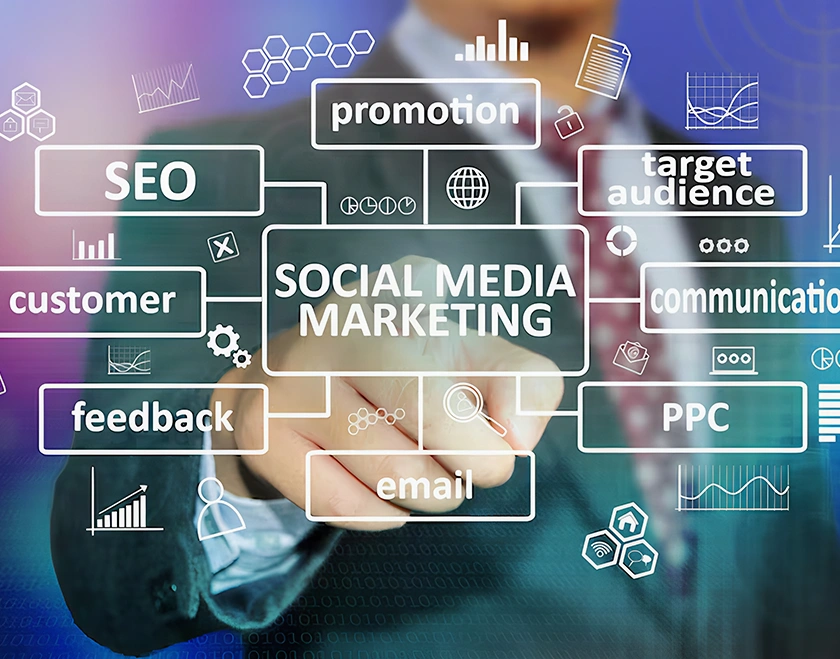
7. AI Digital Marketing 2027: Create High-Quality Content with Artificial Intelligence
Content creation is one of the most powerful applications of AI Digital Marketing 2027, helping businesses produce engaging articles, social media posts, marketing videos, and visual designs more efficiently.
Artificial intelligence is no longer limited to analyzing marketing data. Generative AI technologies can now assist marketers throughout the creative process, from brainstorming campaign ideas to producing and optimizing digital content.
By combining AI-powered tools with human creativity, businesses can streamline content production, maintain brand consistency, and deliver more engaging marketing experiences.
AI-Powered Writing and Copywriting
AI writing assistants such as ChatGPT and Jasper AI can help marketers generate and refine different types of content, including:
-
SEO-friendly blog articles and website content.
-
Engaging social media captions and posts.
-
Email marketing campaigns and newsletters.
-
Advertising headlines and promotional copy.
-
Product descriptions and landing page content.
-
Video scripts and content marketing strategies.
For example, businesses can use AI to generate multiple advertising headlines, experiment with different writing styles, and adapt marketing messages for specific audience segments.
However, AI-generated content should always be reviewed for factual accuracy, originality, brand consistency, and relevance to the target audience.
AI Video Creation and Editing
Video marketing continues to play an important role in digital advertising and social media engagement.
AI-powered video platforms such as Runway and Synthesia help marketers create, edit, and enhance video content with less manual production work.
Depending on the platform and available features, these tools can support:
-
Generating videos from text prompts or visual references.
-
Creating AI avatars for presentations and promotional videos.
-
Producing multilingual video content.
-
Editing footage and removing unwanted backgrounds.
-
Creating visual effects and marketing animations.
-
Accelerating video production workflows.
These capabilities can be particularly valuable for businesses producing short-form content for platforms such as TikTok, Instagram Reels, and YouTube Shorts.
AI-generated videos should still be reviewed to ensure that visual details, messaging, and brand presentation meet professional standards.
AI Graphic Design and Visual Content Creation
Visual communication is another area where artificial intelligence can improve marketing productivity.
Platforms such as Canva AI and Adobe Firefly provide AI-assisted creative features that help marketers develop visual assets for different campaigns.
Common applications include:
-
Social media graphics and promotional banners.
-
Advertising creatives and marketing illustrations.
-
Product presentation visuals.
-
Website graphics and landing page assets.
-
Brand-inspired templates and content variations.
-
Image editing, background removal, and visual enhancement.
AI-powered design tools can help teams explore creative concepts and produce content variations more efficiently.
However, maintaining a consistent visual identity remains essential for building brand recognition.
Businesses should establish clear guidelines for typography, colors, imagery, and visual communication across all marketing channels.
For more insights into developing professional design skills, explore our guide on 8 Essential Steps to Become a Successful Graphic Designer in 2026.
Build an Effective AI Content Marketing Workflow
A successful AI content strategy should combine automation with human oversight.
Businesses can improve their workflows by following these practices:
-
Research Audience Interests: Identify relevant topics, customer questions, and emerging content trends.
-
Generate Content Ideas: Use AI to brainstorm article topics, advertising concepts, and social media campaigns.
-
Create Initial Drafts: Develop written content, visual assets, or video concepts using suitable AI tools.
-
Review and Refine: Verify accuracy, improve originality, and align the content with brand guidelines.
-
Optimize for Distribution: Adapt content formats for websites, search engines, and social media platforms.
-
Measure Performance: Analyze engagement, conversions, and audience feedback to improve future campaigns.
As AI Digital Marketing 2027 evolves, businesses that combine efficient AI workflows with original creative thinking may gain a meaningful competitive advantage.
Advanced AI SEO Optimization and Search Experience
Artificial intelligence is changing how marketers research, optimize, and evaluate digital content.
Beyond traditional keyword research, AI-assisted SEO tools can help businesses understand search intent, identify content gaps, and improve website usability.
AI-Assisted Search Intent Analysis
Understanding why users perform specific searches is essential for creating relevant content.
AI tools can help classify search queries according to informational, navigational, commercial, and transactional intent.
Marketers can use these insights to create content that better addresses user expectations.
Website Behavior Analysis and Heatmaps
Tools such as Microsoft Clarity and Hotjar provide behavioral analytics features, including heatmaps and session recordings.
These insights can help marketers identify:
-
Areas of a webpage receiving the most attention.
-
Navigation elements that users frequently interact with.
-
Sections where visitors experience difficulties.
-
Potential usability problems affecting conversions.
-
Opportunities to improve landing page layouts.
Although heatmaps are not direct Google ranking factors, improving usability can help visitors navigate websites more effectively and complete important actions.
Optimize Content for Traditional and AI-Powered Search
As search experiences incorporate more AI-generated summaries and conversational features, businesses should focus on producing content that is useful, accurate, clearly structured, and easy to understand.
Important practices include:
-
Publishing original content that demonstrates relevant expertise.
-
Using descriptive headings and logical content structures.
-
Answering important audience questions clearly.
-
Adding relevant internal and external links.
-
Maintaining accurate and updated information.
-
Implementing appropriate structured data where applicable.
-
Improving website performance and accessibility.
AI tools can support these activities, but they cannot guarantee higher search rankings.
A sustainable SEO strategy should prioritize genuine user value over automated content production.
Measure AI Marketing Performance with Advanced Analytics
Measuring campaign performance is essential for understanding whether AI-powered marketing strategies are producing meaningful business results.
An important advantage of AI Digital Marketing 2027 is the ability to combine automated reporting, predictive insights, and marketing analytics to support better decision-making.
AI-Assisted Marketing Reports
Analytics and reporting platforms such as Google Analytics 4, Looker Studio, and HubSpot can help businesses organize marketing data and evaluate campaign performance.
Looker Studio, previously known as Google Data Studio, allows marketers to create dashboards and visualize information from connected data sources.
AI capabilities vary by platform and integration, but automated workflows can help teams identify trends, summarize performance changes, and highlight potential optimization opportunities.
Track the Most Important Marketing KPIs
Businesses should focus on performance indicators that align with their marketing objectives.
Important metrics include:
-
Conversion Rate: The percentage of visitors who complete a desired action.
-
Return on Investment (ROI): The financial return generated relative to campaign costs.
-
Customer Acquisition Cost (CAC): The average cost of acquiring a new customer.
-
Customer Lifetime Value (CLV): The estimated revenue or value generated by a customer relationship.
-
Click-Through Rate (CTR): The percentage of impressions that result in clicks.
-
Customer Retention Rate: The percentage of customers who remain engaged over a specific period.
-
Return on Ad Spend (ROAS): The revenue generated relative to advertising expenditure.
These metrics help marketers understand which strategies are delivering results and where improvements are needed.
Turn Marketing Data into Actionable Decisions
AI-assisted analytics can support marketing teams by identifying unusual performance changes, comparing campaign results, and estimating potential future outcomes.
For example, if a campaign generates significant traffic but few conversions, marketers can investigate landing page usability, audience relevance, or advertising messaging.
Similarly, analyzing customer acquisition costs across different channels can help businesses make more informed budget decisions.
The objective is not simply to collect more data but to transform available information into practical improvements.
Businesses that regularly evaluate performance and adjust their strategies can improve marketing efficiency and respond more effectively to changing customer behavior.
“Artificial intelligence doesn’t replace great marketers; it empowers them to think smarter, create faster, and achieve more.”
In-Depth Insights: The Future of AI Digital Marketing Beyond 2027
The future of digital marketing is expected to be shaped by increasingly sophisticated AI systems, intelligent automation, and more personalized customer experiences.
Emerging developments may include AI marketing agents capable of coordinating multiple workflow stages, more advanced predictive analytics, and tools that connect content creation with campaign performance measurement.
Businesses may also increasingly adopt multimodal AI technologies that combine text, images, audio, and video within unified marketing workflows.
However, successful adoption will depend on responsible data practices, transparent communication, human oversight, and the ability to maintain authentic relationships with customers.
Rather than replacing marketing professionals, artificial intelligence is likely to continue changing how marketers research, plan, execute, and evaluate their strategies.
Companies that invest in both technological capabilities and human expertise will be better prepared to adapt to future developments.
Conclusion: Achieve Business Growth with AI Digital Marketing 2027
AI Digital Marketing 2027 represents an important opportunity for businesses seeking to improve customer engagement, optimize advertising campaigns, and build more efficient marketing operations.
From advanced data analytics and personalized customer experiences to predictive marketing, intelligent advertising, SEO optimization, and AI-powered content creation, artificial intelligence can support nearly every stage of the digital marketing process.
The seven strategies outlined in this guide provide a practical foundation for businesses looking to integrate AI into their marketing activities.
However, adopting AI tools alone does not guarantee success. Effective implementation requires clear business objectives, reliable data, continuous performance monitoring, and a strong understanding of customer needs.
Businesses should focus on using artificial intelligence to enhance creativity, automate repetitive processes, improve decision-making, and deliver meaningful value to their audiences.
As digital technologies continue to evolve, marketers who combine AI-powered capabilities with strategic thinking and authentic communication will be better positioned to compete in an increasingly dynamic marketplace.
Ultimately, successful AI Digital Marketing 2027 is not simply about adopting the latest tools. It is about using technology intelligently to build stronger customer relationships, improve marketing performance, and achieve sustainable business growth.